


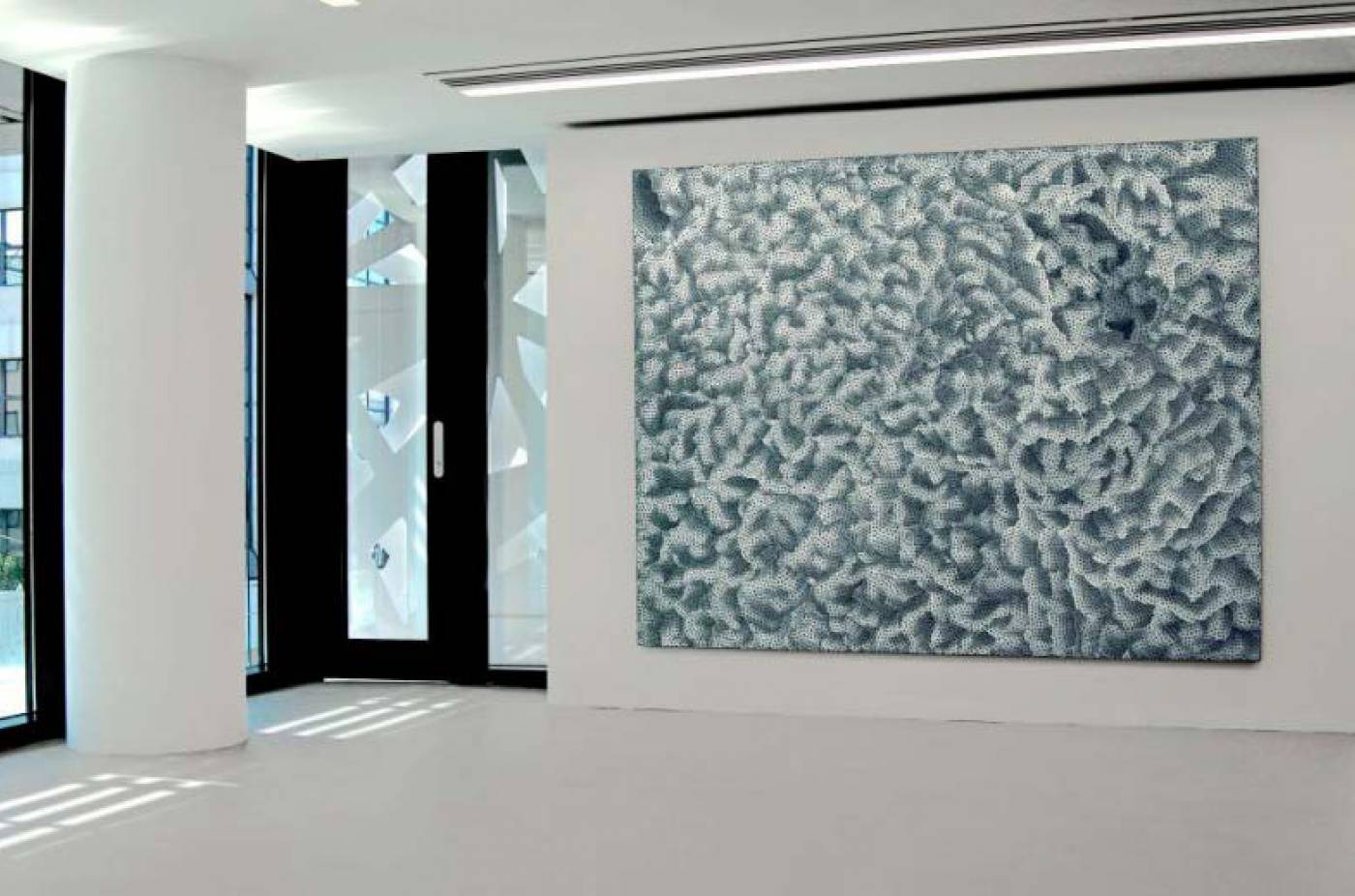
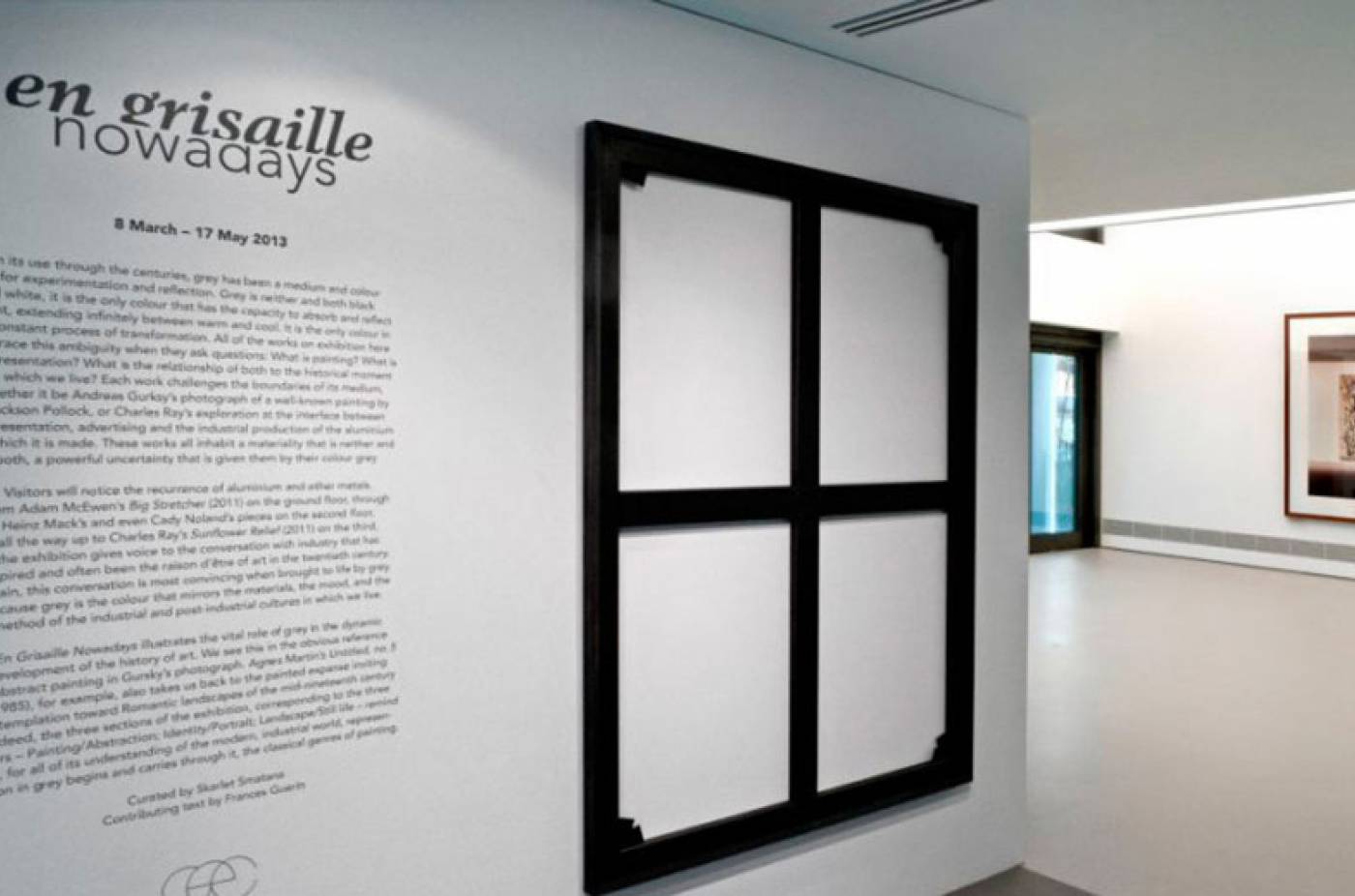
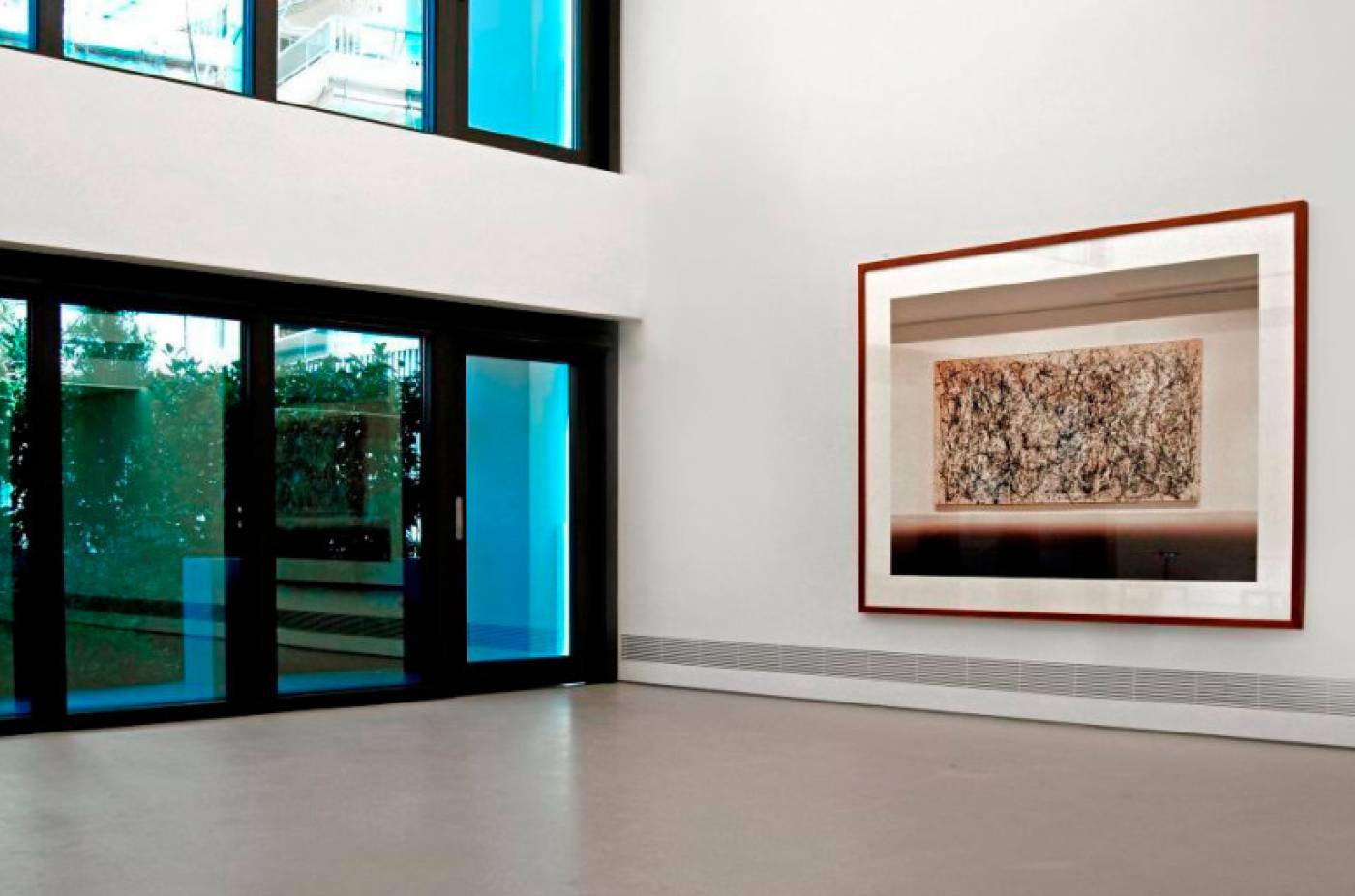
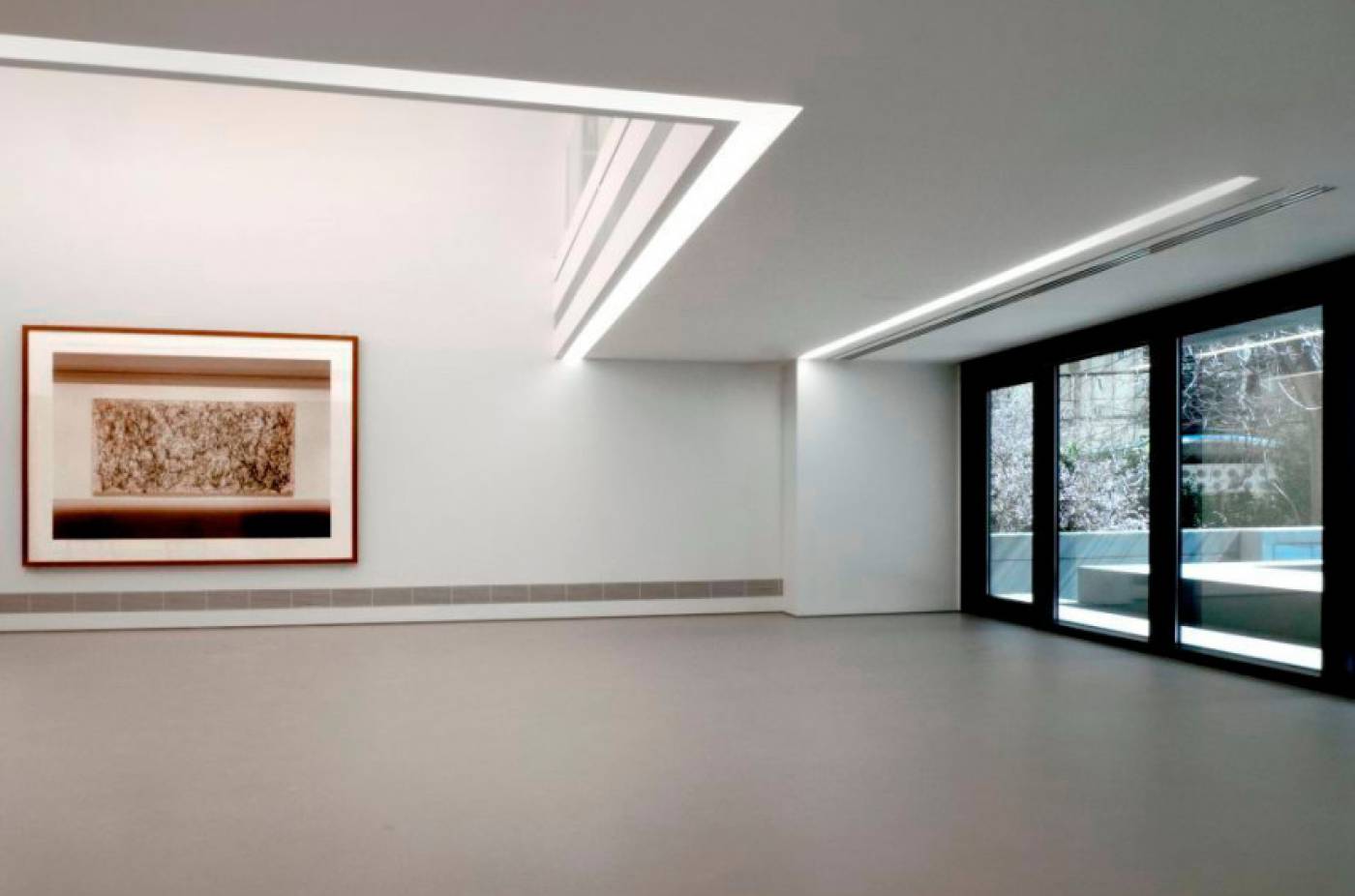
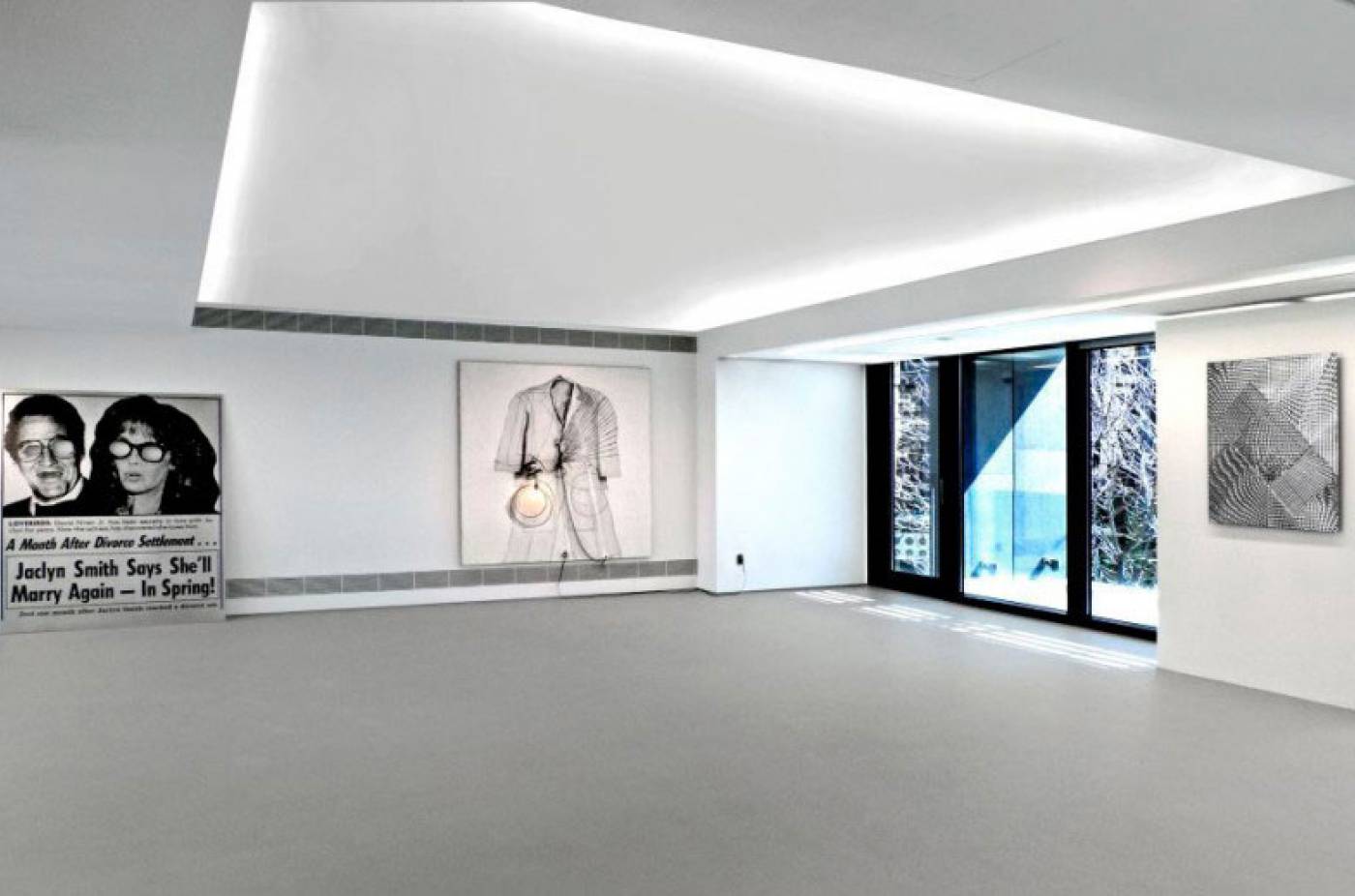
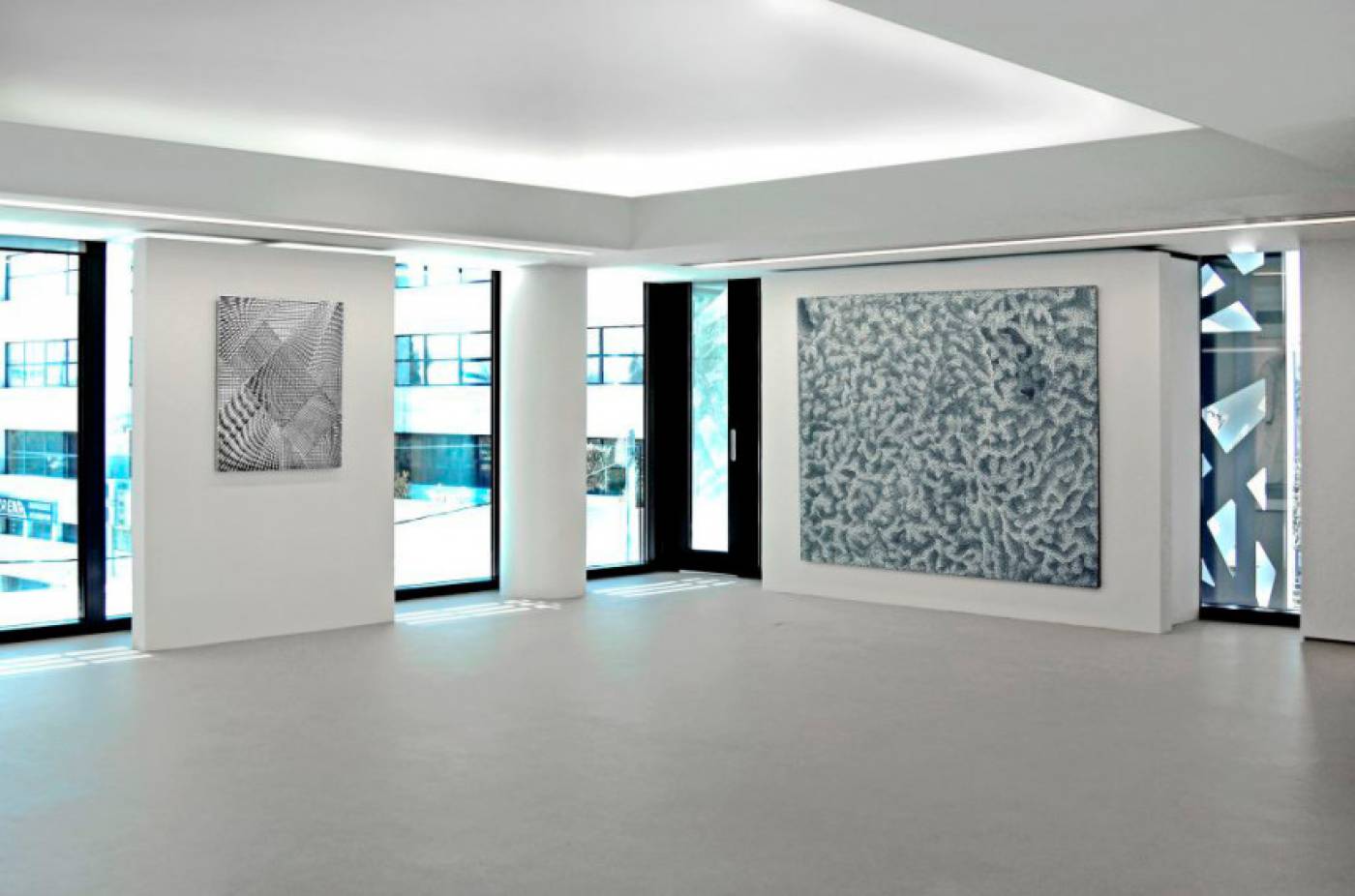
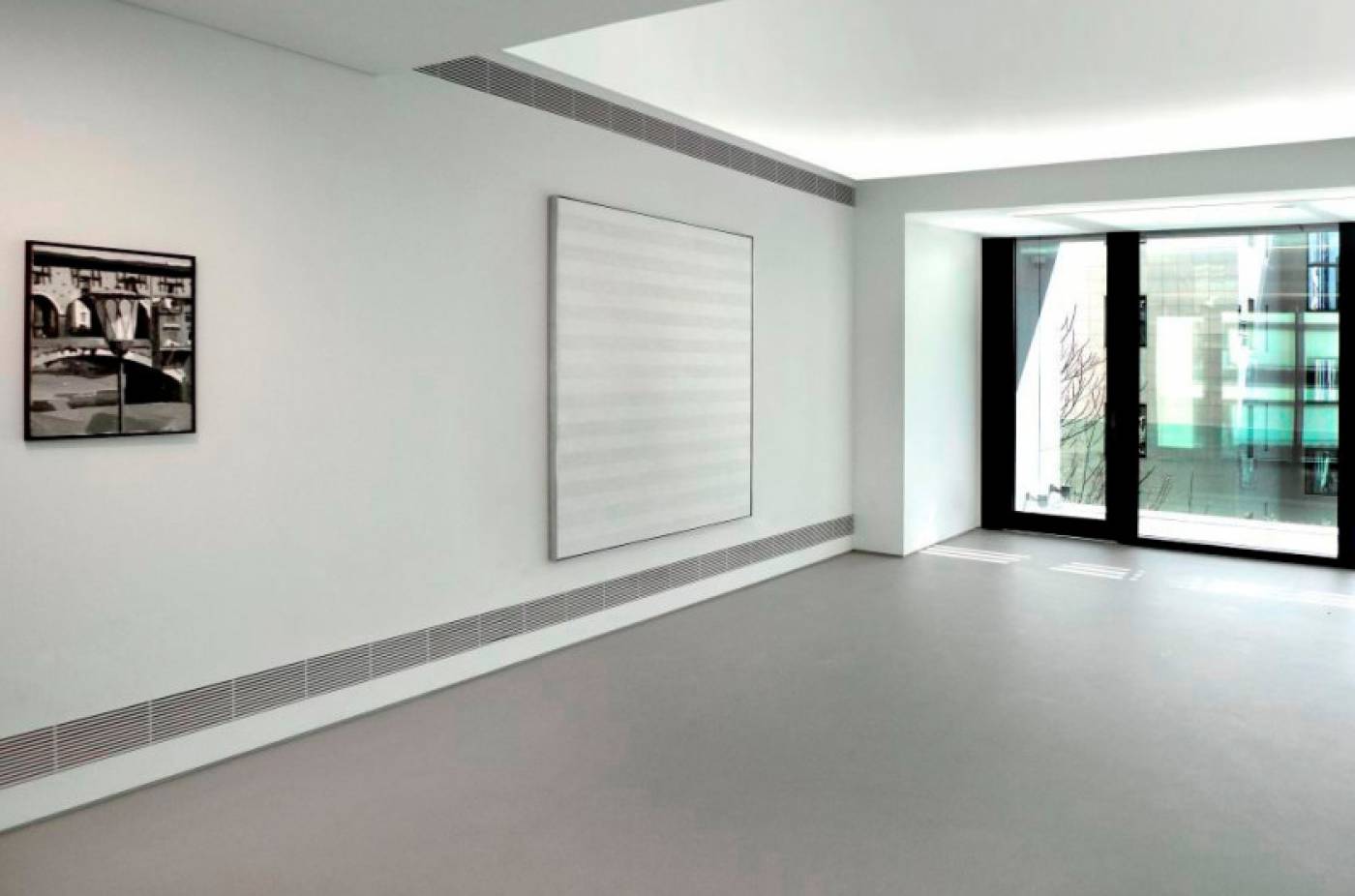
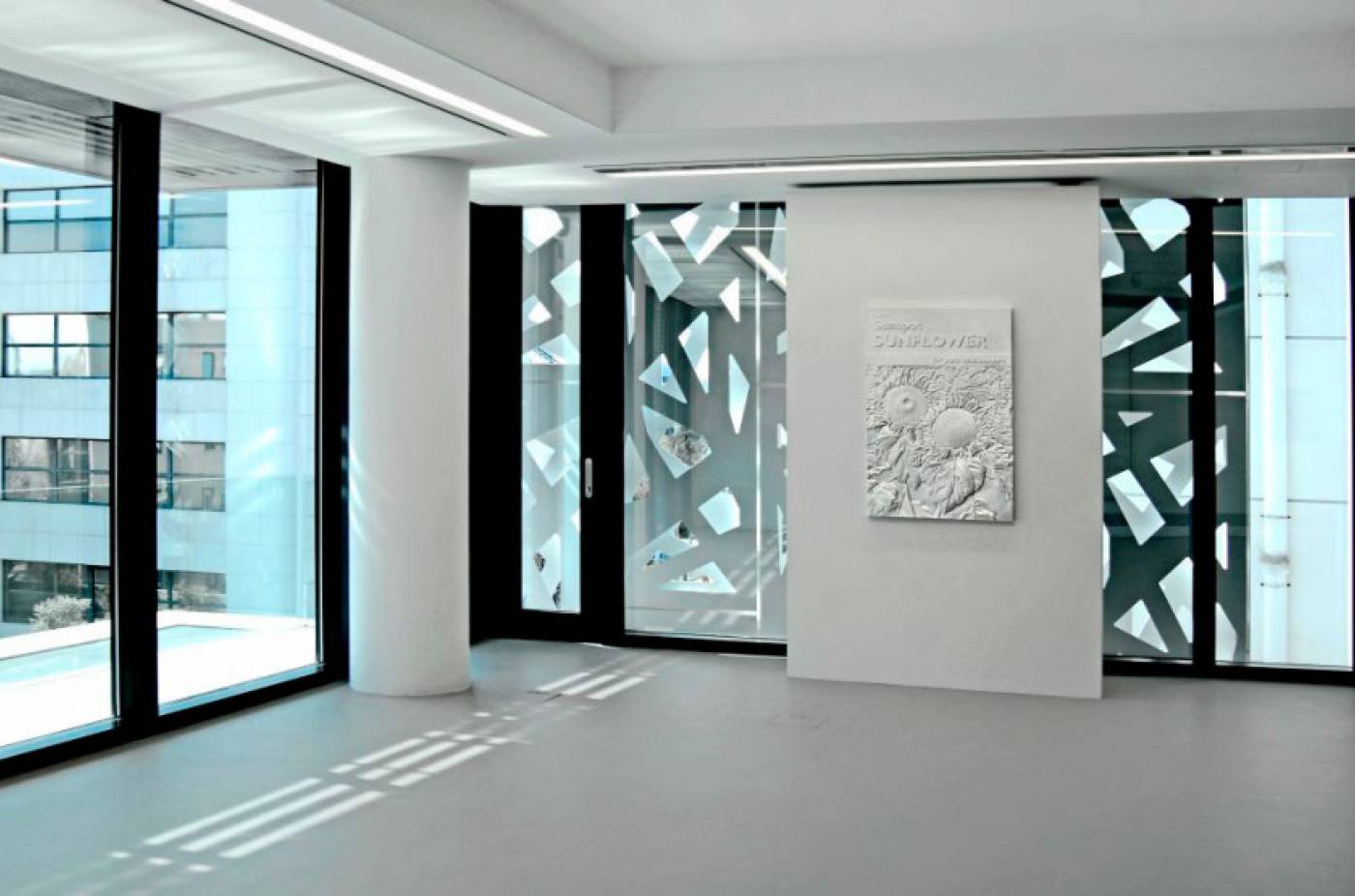
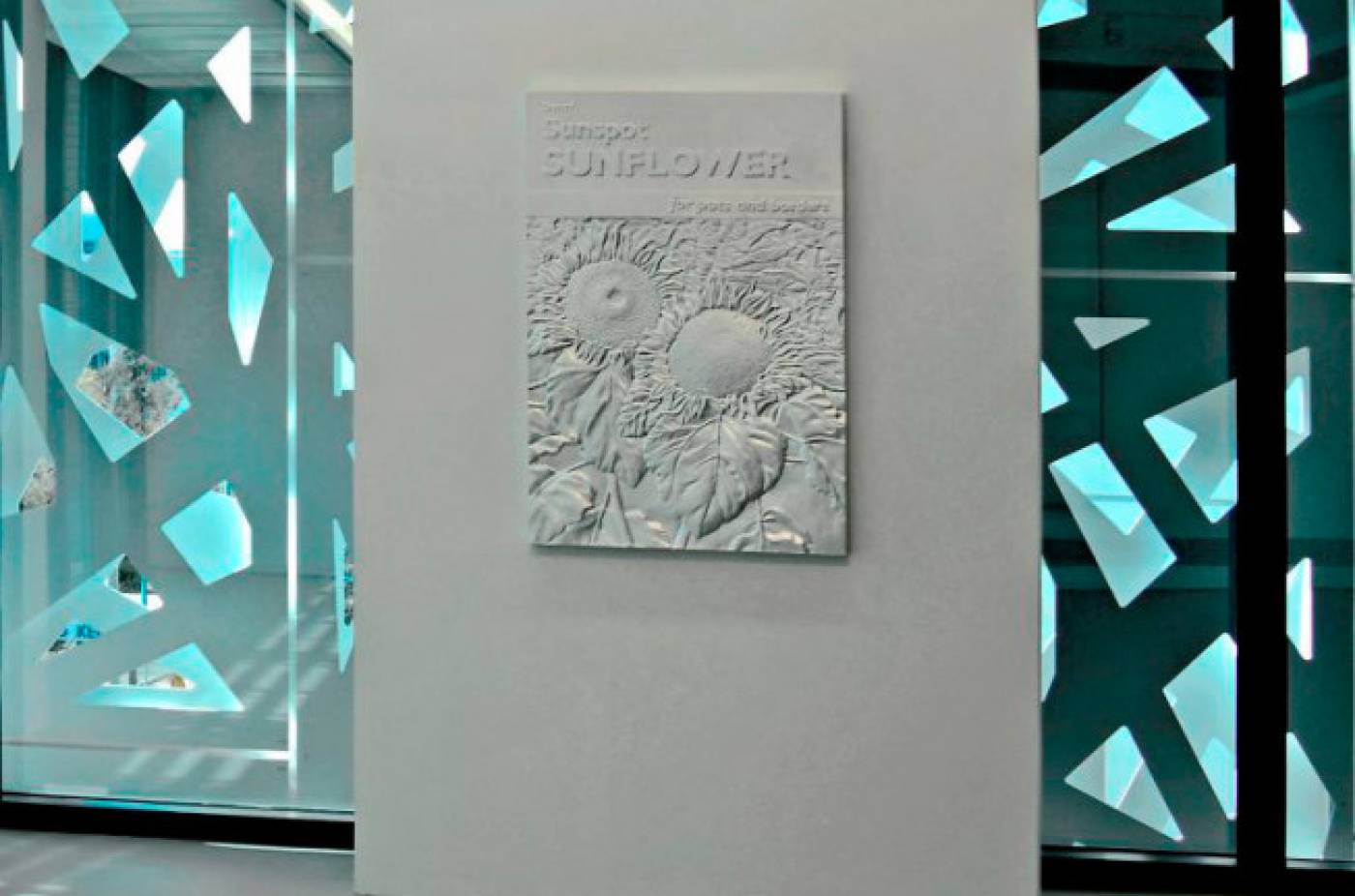
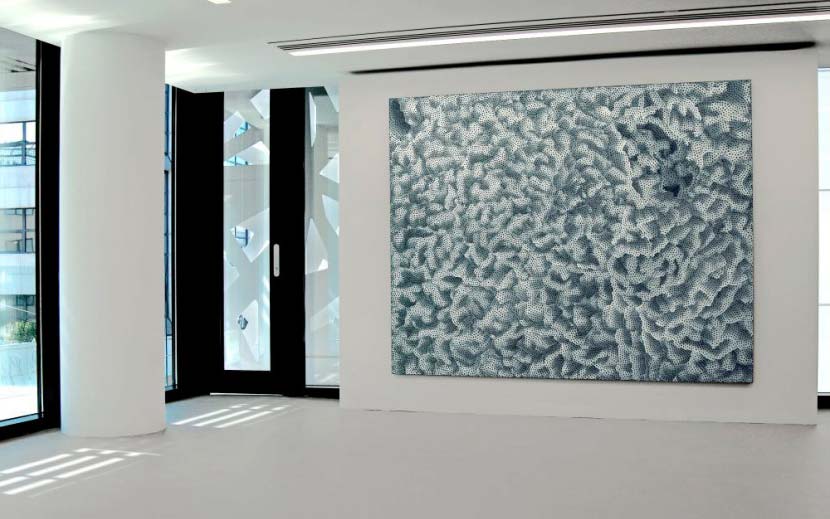
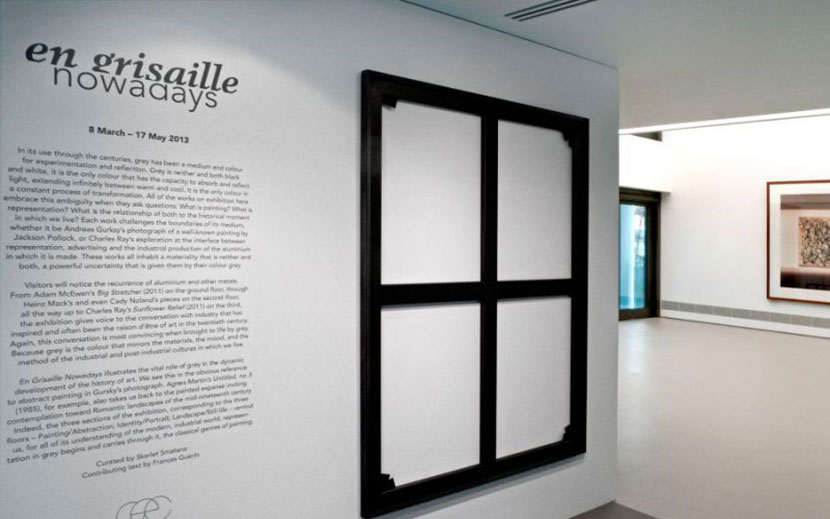
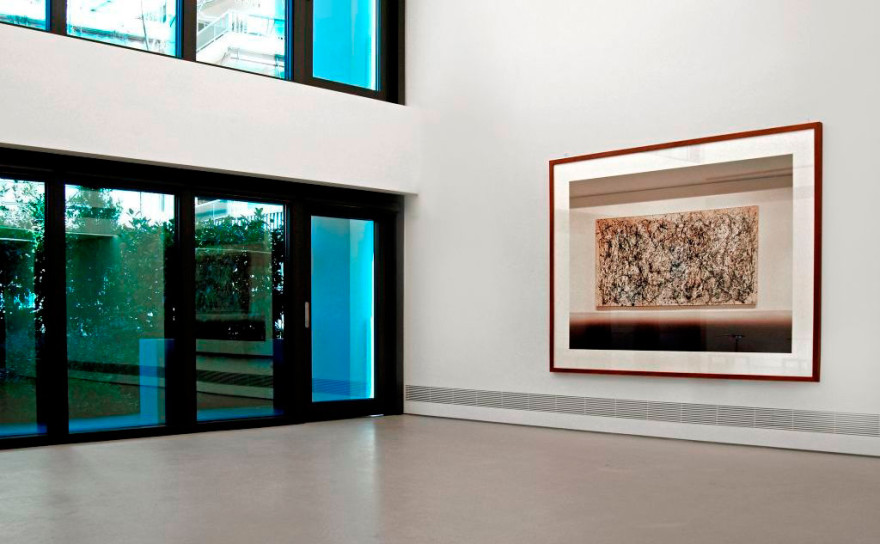
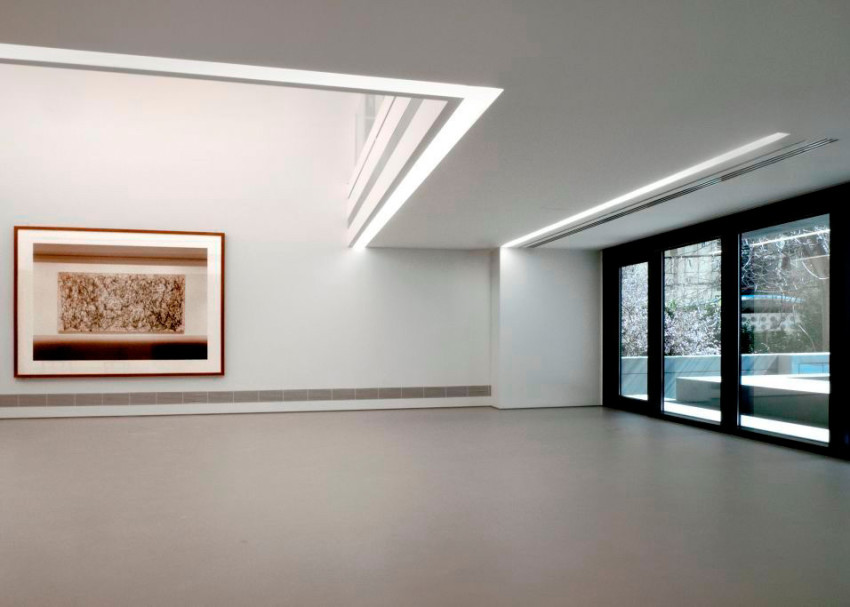
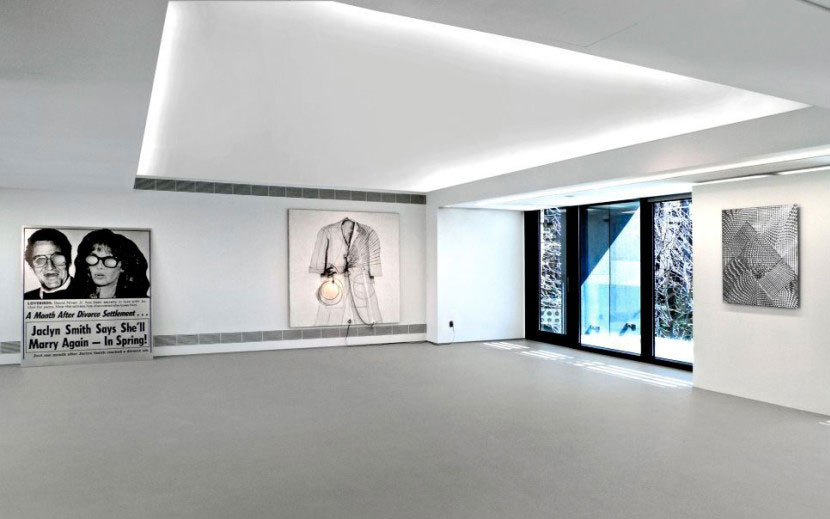
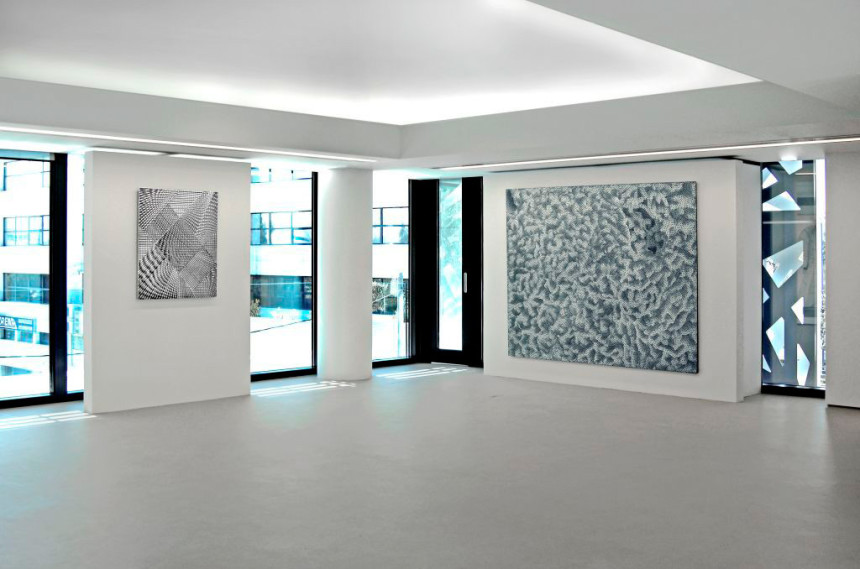
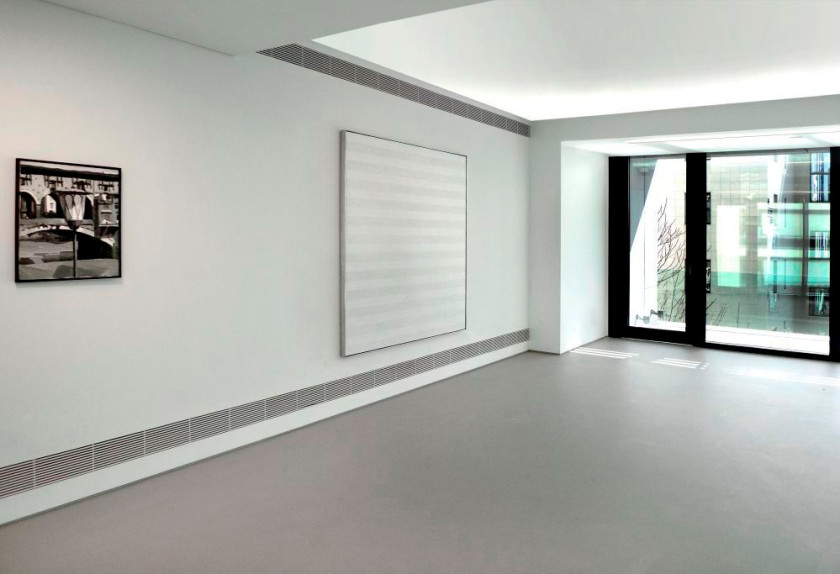
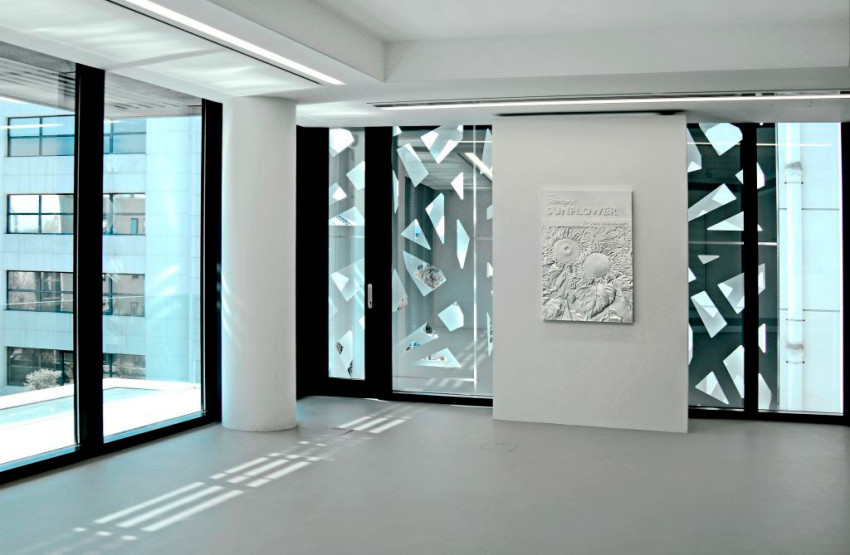
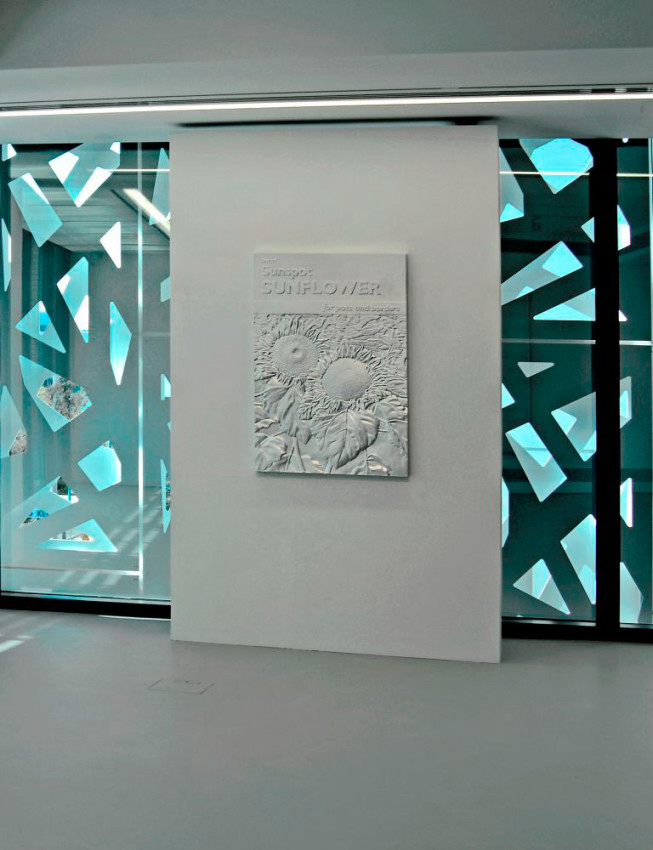


In its use through the centuries, grey has been a medium and colour for experimentation and reflection. Grey is the only colour that has the capacity to absorb and reflect light, extending infinitely between warm and cool, in a constant process of transformation. All of the works on exhibition embrace this ambiguity when they ask questions: What is painting? What is representation? What is the relationship of both to the historical moment in which we live? Each work challenges the boundaries of its medium, whether it be Andreas Gurksy’s photograph of a wellknown painting by Jackson Pollock, or Charles Ray’s exploration at the interface between representation, advertising and the industrial production of the aluminium in which it is made.
Visitors will notice the recurrence of aluminium and other metals. From Adam McEwen’s Big Stretcher (2011), through Heinz Mack’s and even Cady Noland’s pieces, to Charles Ray’s Sunflower Relief (2011), the exhibition gives voice to the conversation with industry that has inspired and often been the raison d’être of art in the twentieth century. Again, this conversation is most convincing when brought to life by grey. The colour that mirrors the materials, the mood, and the method of the industrial and post-industrial cultures in which we live.
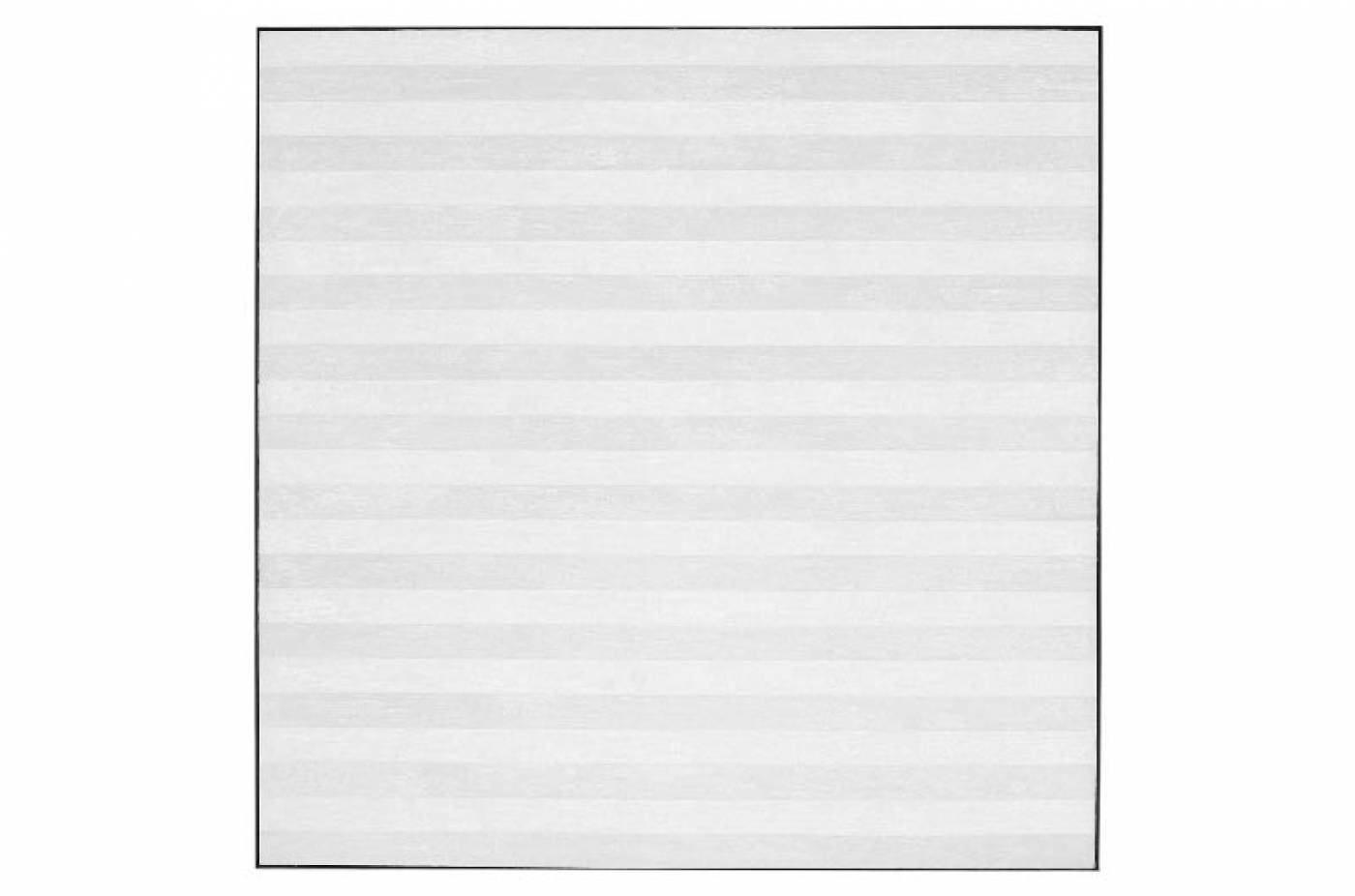
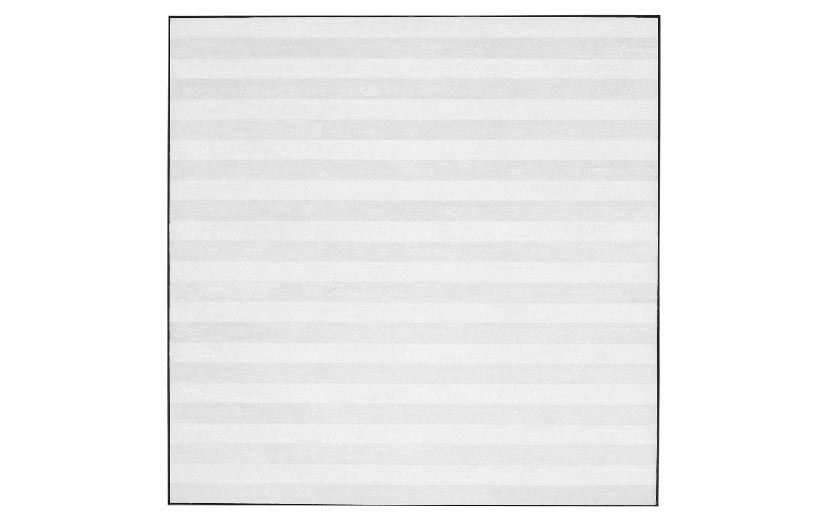
En Grisaille Nowadays illustrates the vital role of grey in the dynamic development of the history of art. We see this in the obvious reference to abstract painting in Gursky’s photograph. Agnes Martin’s Untitled, no. 5 (1985), for example, also takes us back to the painted expanse inviting contemplation toward Romantic landscapes of the midnineteenth century. Indeed, the three sections of the exhibition — Painting/Abstraction; Identity/Portrait; Landscape/Still life — remind us: for all of its understanding of the modern, industrial world, representation in grey begins and carries through it, the classical genres of painting.